Digital Temple
A web-based educational platform and VR experience of Kaihua Monastery.
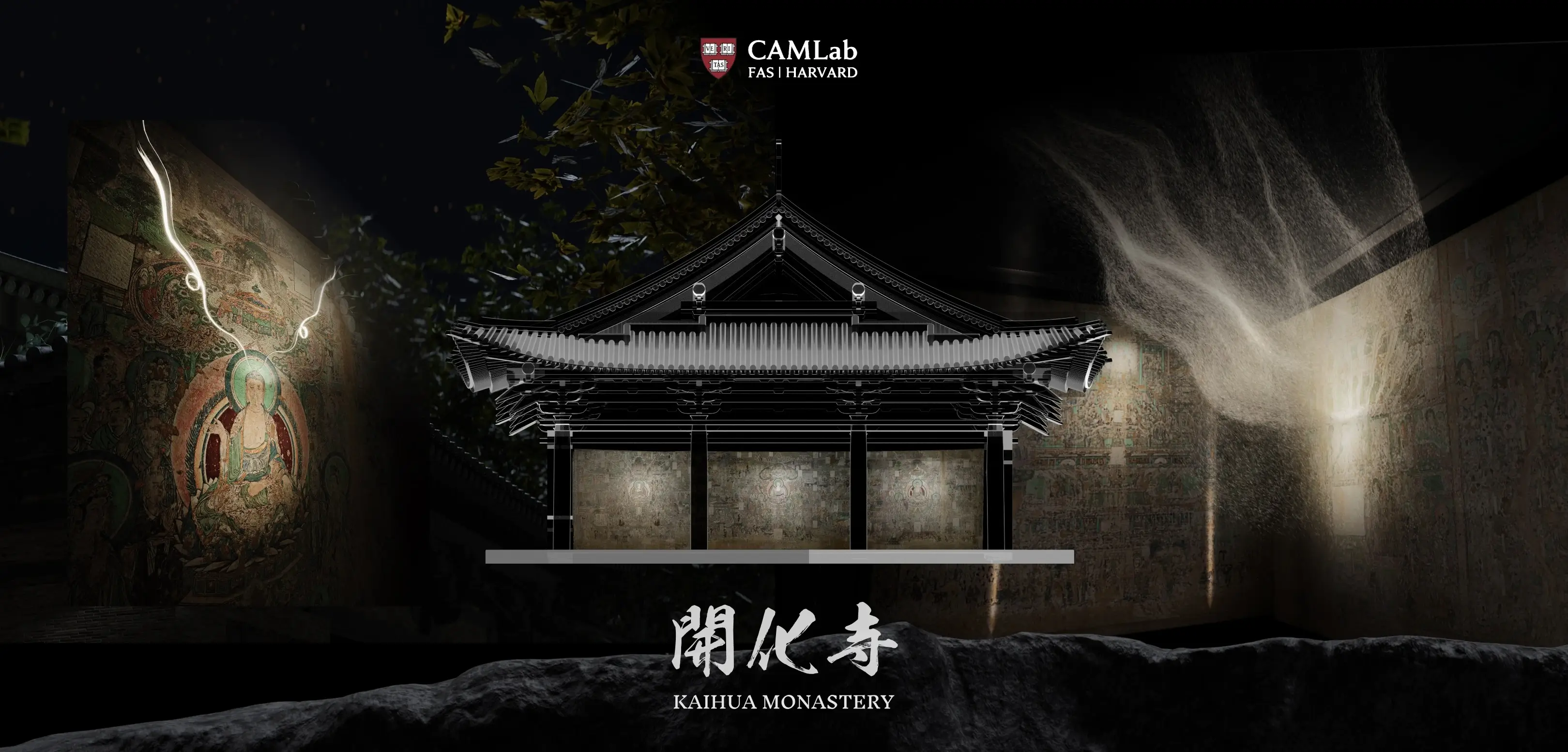
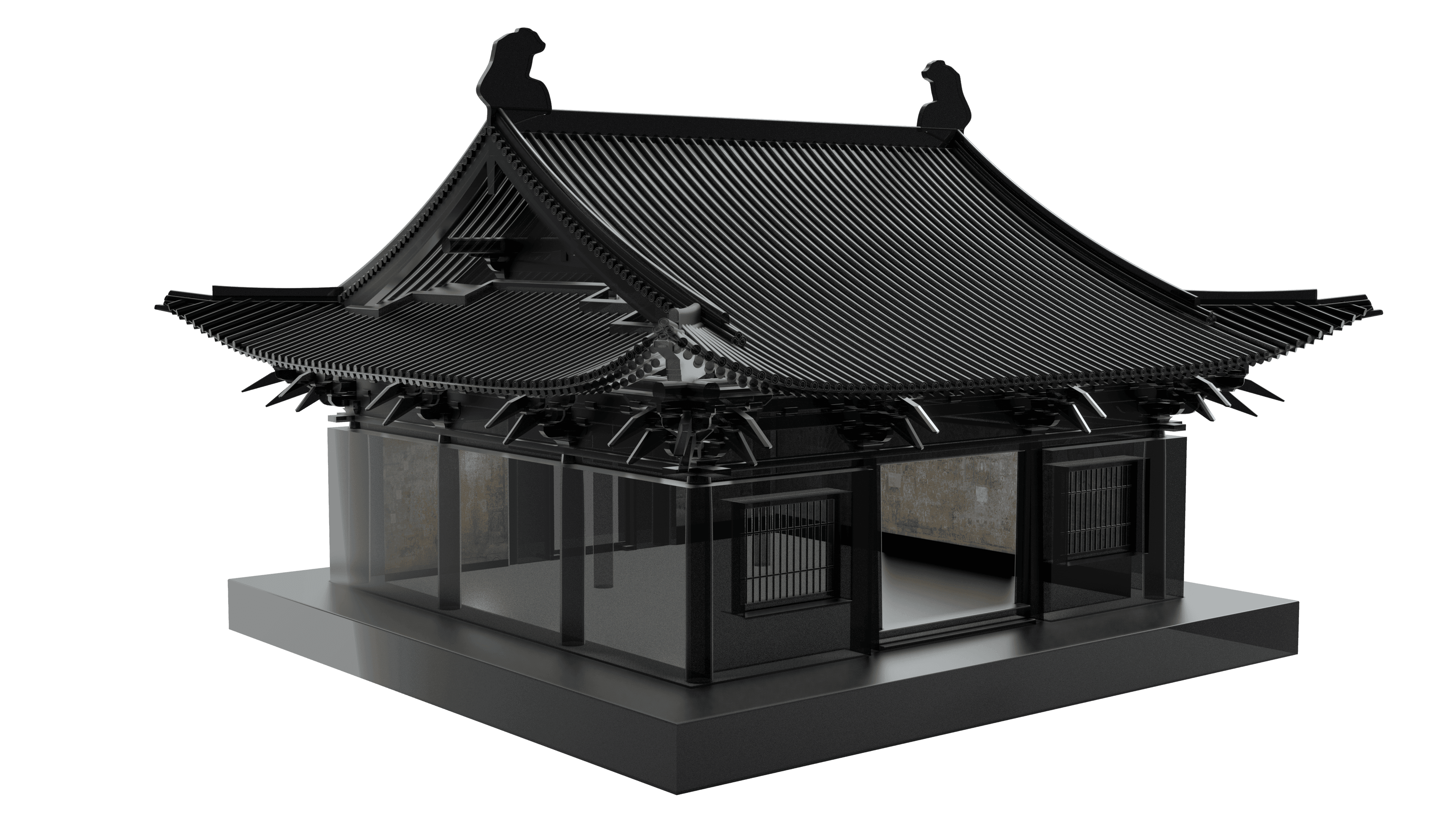
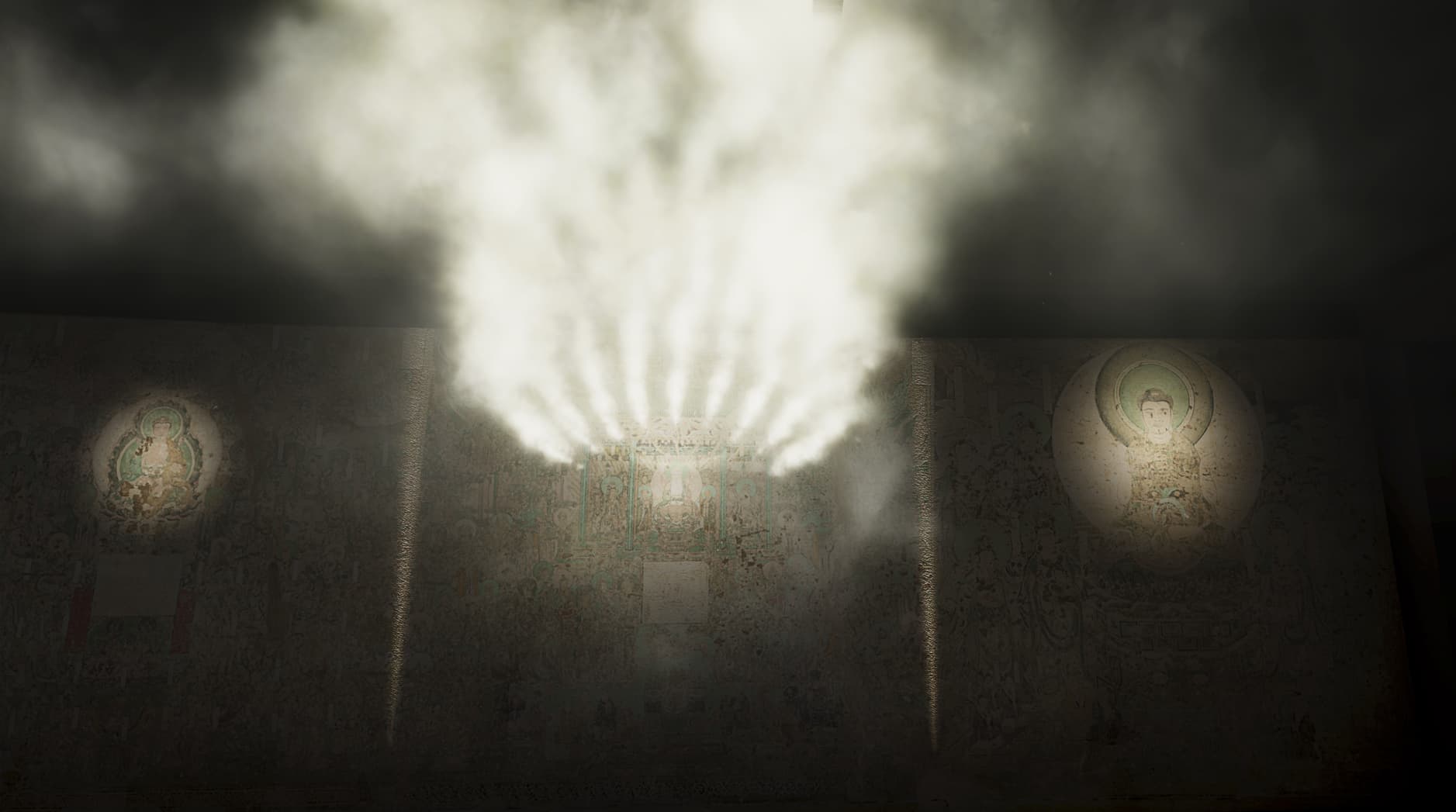
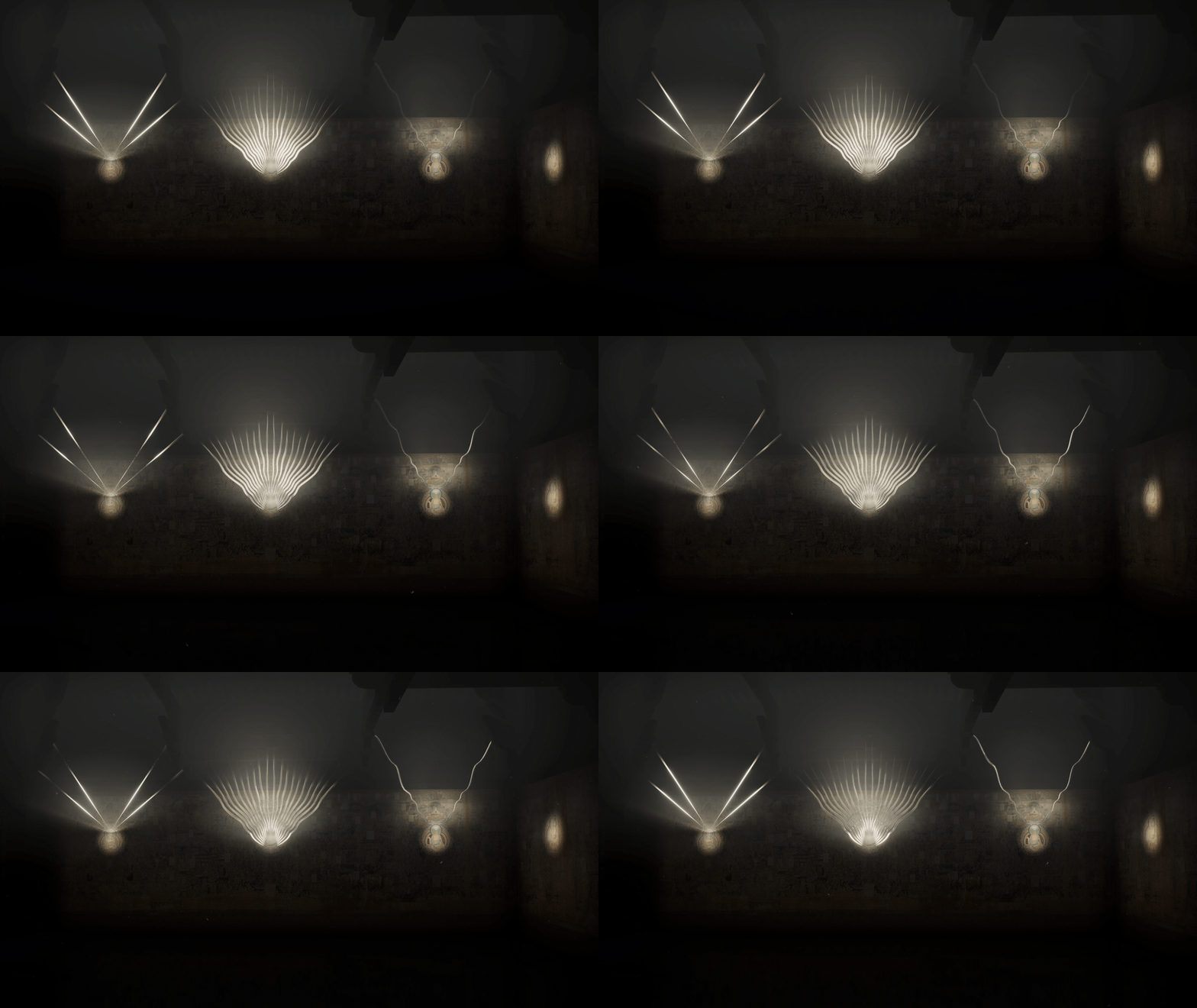
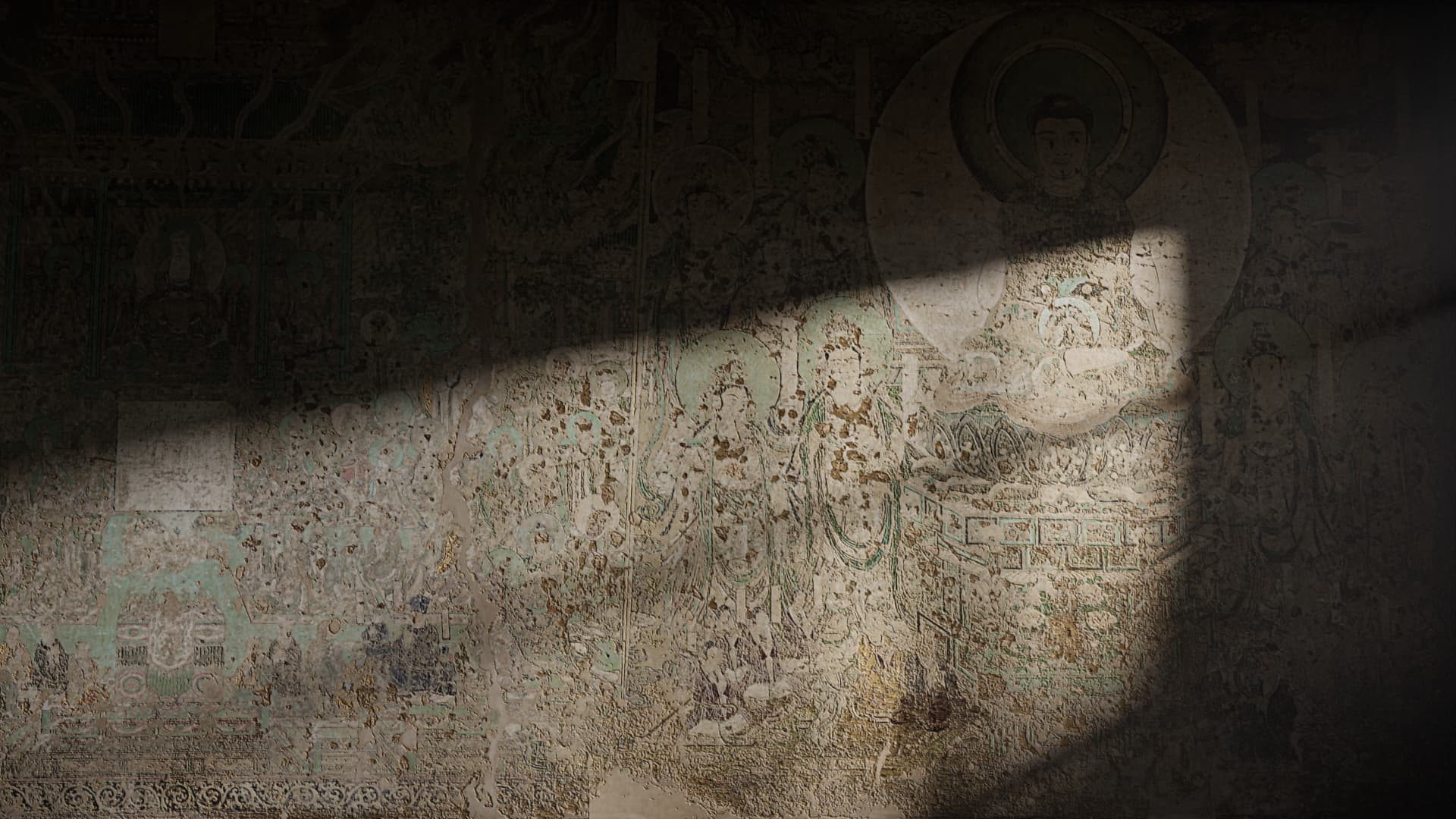
Kaihua Monastery, in the western foothills of the Taihang range in Shanxi, was once a large complex. Only its main Buddha hall still stands, and its interior is dense with painted iconography that builds changes of time and space into the pictures, turning the hall into a virtual theatre. Harvard CAMLab unpacks the artistic and religious logic of that programme and stages the temple's transformation as a virtual experience, where image, space and sound work together toward a transcendence of the body.
The hall, rebuilt
The hall and its iconographies were reconstructed for real-time playback, then opened up two ways: a web platform where the murals can be annotated, archived at high resolution and learned through matching games, and a 360° VR walkthrough for headset and tablet.
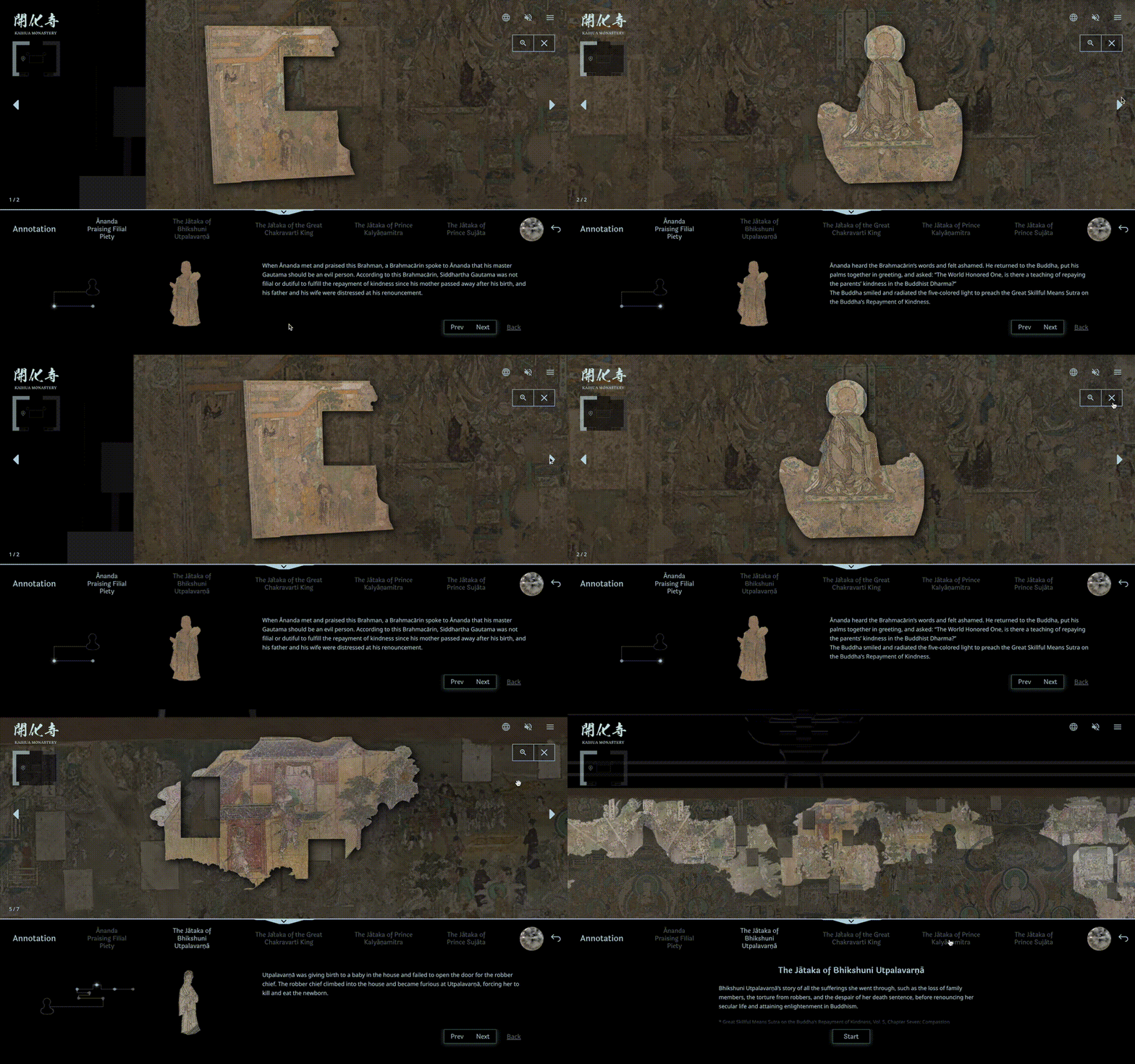
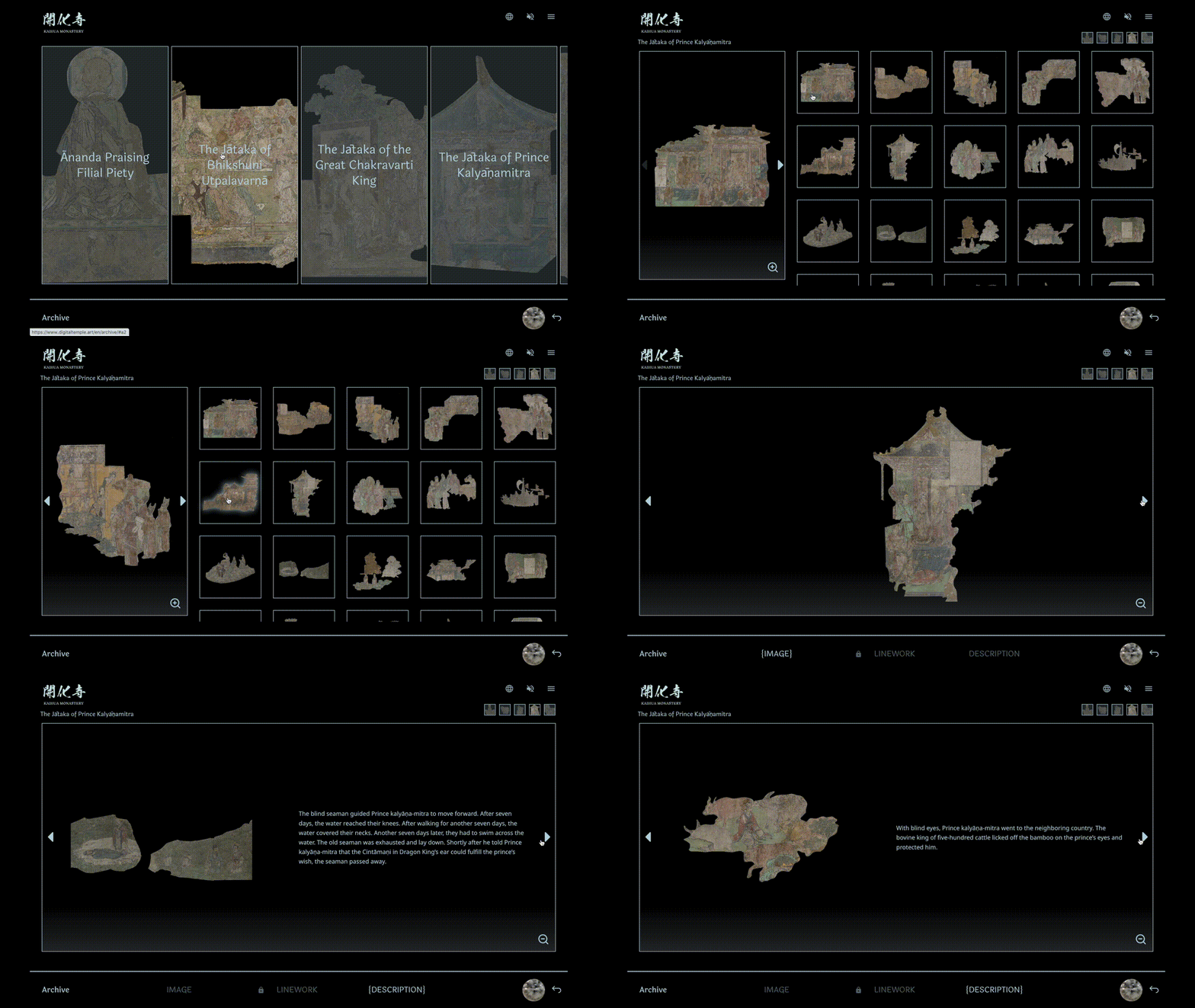
In the room
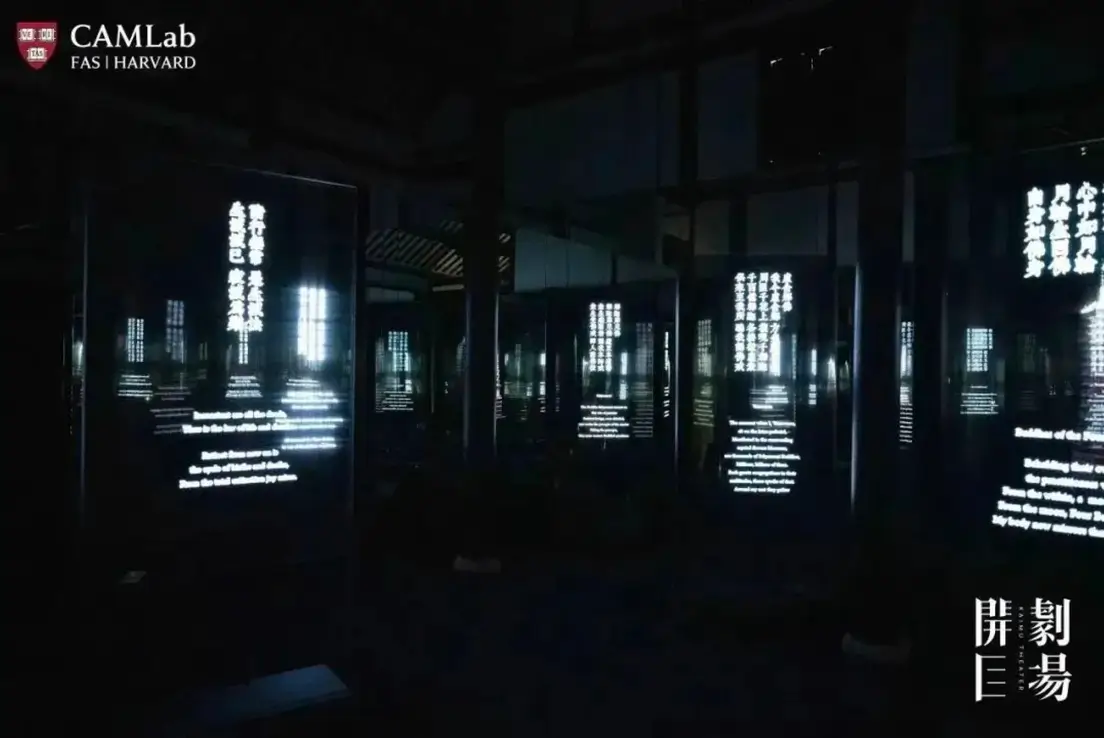
Alongside the platform, the team staged physical exhibitions at Harvard's CAMLab Cave and museums across Asia: installation, immersive theatre and academic programming around the same reconstruction.
- Role
- 3D modelling and layout of the hall and its iconographies · VFX and shader work for the mural transformations · VR technical art, covering asset optimization, lighting and runtime tuning for headset and tablet
- Built with
- Houdini · Unreal Engine 5 · Unity · Blender · Python · WebGL
- With
- Harvard CAMLab
- Subject
- Kaihua Monastery, Shanxi. The Treasure Hall of the Great Hero, c. 1073–96
- Shown at
- Harvard CAMLab Cave, Cambridge, and museums across Asia
- More
- digitaltemple.art · case study by Ally Luo, product designer
Gallery